
, a classic Korean dish made with chewy sweet potato noodles, colorful vegetables, savory seasonings, and optional beef or tofu. Learn about its fascinating history, ingredients, preparation methods, nutrition facts, expert cooking tips, FAQs, and serving suggestions in this complete guide to one of Korea's most beloved traditional recipes.)
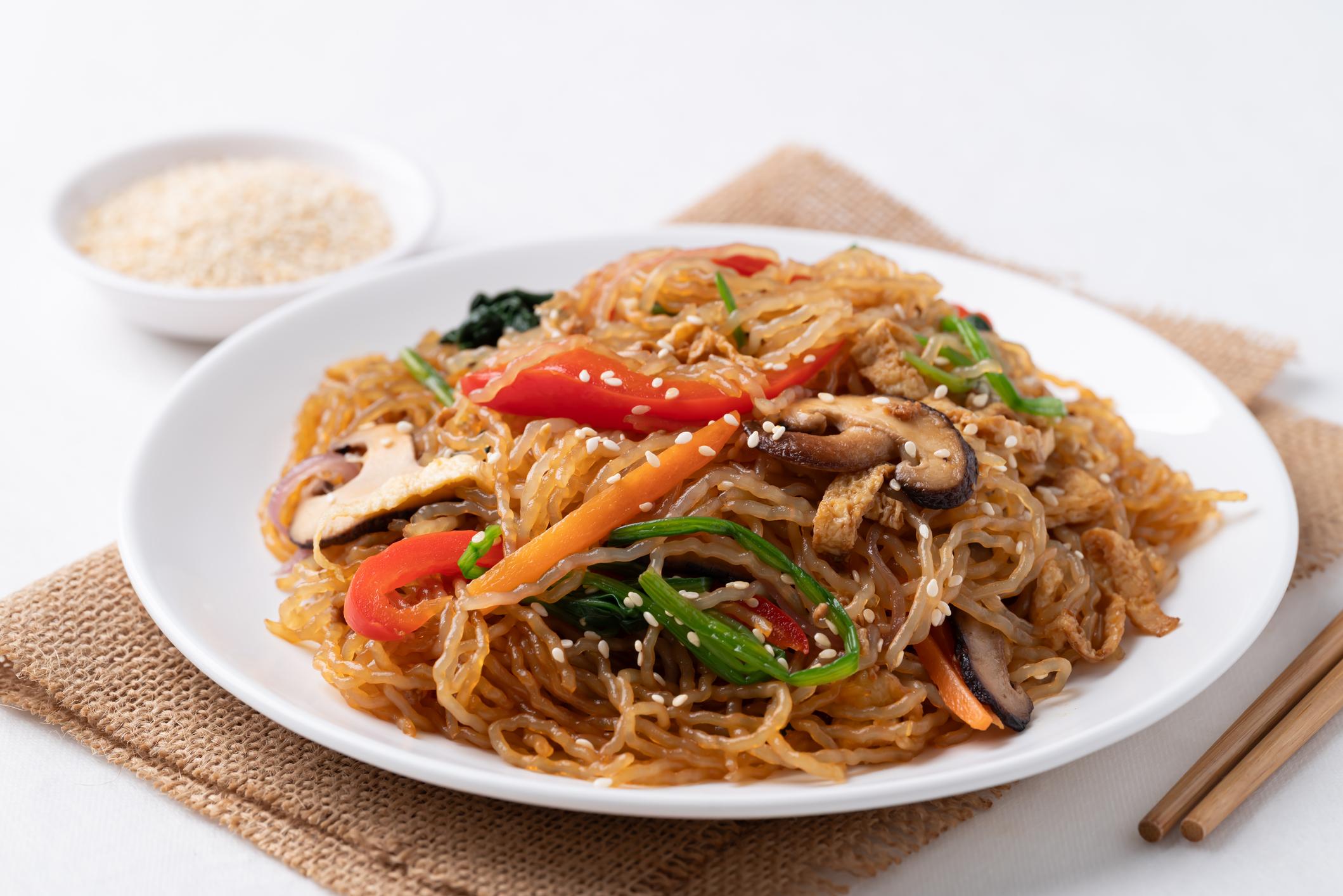
Korean Glass Noodles, commonly known as Japchae, are one of Korea’s most iconic and beloved dishes. Made from sweet potato starch, these translucent noodles have a uniquely chewy texture and are traditionally stir-fried with colorful vegetables, savory seasonings, and often beef or other proteins. The result is a harmonious blend of flavors, textures, and vibrant colors that make Japchae both visually appealing and delicious.
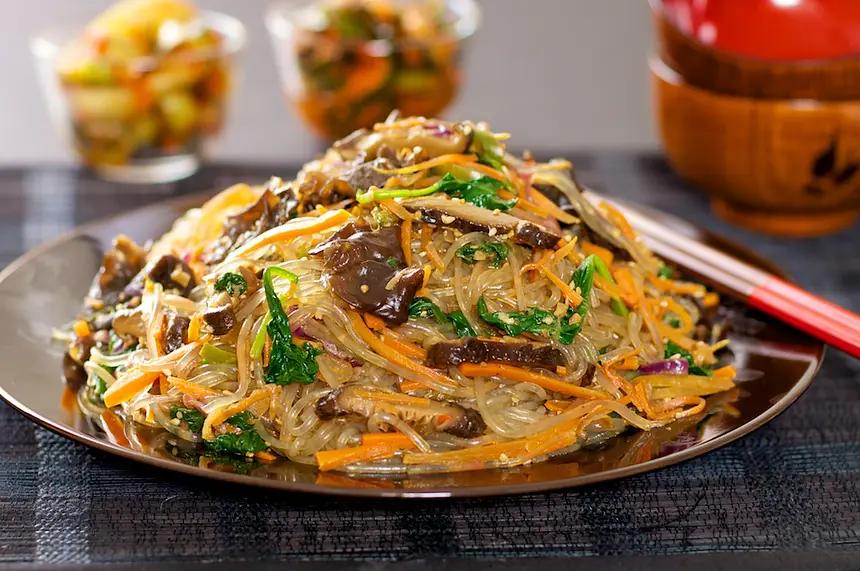
Korean Glass Noodles:
Originally served as a royal court dish, Japchae has evolved into a staple of Korean cuisine enjoyed during holidays, celebrations, family gatherings, and everyday meals. The dish showcases the Korean culinary philosophy of balancing flavors, colors, and nutrition in a single plate.Today, Korean Glass Noodles are popular worldwide due to their versatility and satisfying taste. Whether served warm, at room temperature, or cold, Japchae offers a delightful combination of sweet, savory, and umami flavors that appeal to a wide range of palates.
History:
Japchae dates back to the early 17th century during Korea’s Joseon Dynasty. Historical records suggest that the dish was first created for a royal banquet hosted by King Gwanghaegun. The original version consisted solely of vegetables and mushrooms without noodles.As sweet potato starch noodles became available in Korea during the 20th century, they were incorporated into the dish and eventually became its defining ingredient. Over time, Japchae gained popularity beyond the royal court and became a cherished part of Korean home cooking.
Subscribe to our youtube channel Kitchenpedia for more delicious recipes and hit the like button if you enjoyed this youtubevideo. Share it with your friends and Family.
Korean Glass Noodles A Colorful and Flavorful Korean

Ingredients
For the Noodles
- 8 oz (225g) Korean sweet potato glass noodles (dangmyeon)
For the Vegetables
- 1 carrot, julienned
- 1 red bell pepper, sliced
- 1 onion, thinly sliced
- 2 cups spinach
- 4 shiitake mushrooms, sliced
- 2 green onions, chopped
Optional Protein
- 6 oz (170g) beef strips or tofu
Seasoning Sauce
- 4 tablespoons soy sauce
- 2 tablespoons sesame oil
- 1 tablespoon brown sugar
- 2 cloves garlic, minced
- 1 teaspoon sesame seeds
- Black pepper to taste
Instructions
- Boil the glass noodles according to package instructions until tender but chewy. Drain and set aside.
- Mix soy sauce, sesame oil, brown sugar, garlic, sesame seeds, and black pepper in a bowl.
- Stir-fry carrots, onions, mushrooms, and bell peppers until slightly tender.
- Add spinach and cook briefly until wilted.
- If using beef or tofu, cook separately until done.
- Add noodles to the pan along with the cooked protein.
- Pour the sauce over the noodles and toss well to coat evenly.
- Garnish with green onions and sesame seeds before serving.
Notes
- Authentic Japchae uses sweet potato starch noodles.
- Sesame oil is essential for traditional flavor.
- The noodles should remain slightly chewy.
- Vegetables should retain some crunch.
- Beef is the most traditional protein option.
- Tofu works well for a vegetarian version.
- Japchae can be served warm or cold.
- Leftovers store well in the refrigerator.
Tips for Korean Glass Noodles:
- Do not overcook the noodles.
- Cut noodles after cooking for easier serving.
- Use fresh vegetables for the best texture.
- Marinate beef before cooking for extra flavor.
- Toast sesame seeds before garnishing.
- Stir-fry vegetables separately for vibrant colors.
- Toss noodles gently to prevent breaking.
- Let flavors meld for a few minutes before serving.
FAQs for Korean Glass Noodles:
1. What are Korean Glass Noodles made from?
They are made primarily from sweet potato starch.
2. What is Japchae?
Japchae is a Korean dish featuring glass noodles stir-fried with vegetables and seasonings.
3. Are Korean Glass Noodles gluten-free?
The noodles themselves are usually gluten-free, but check sauces for gluten-containing ingredients.
4. Can I make Japchae vegetarian?
Yes, simply use tofu and omit meat.
5. Why are the noodles called glass noodles?
Their translucent appearance resembles glass when cooked.
6. Can Japchae be eaten cold?
Yes, it tastes delicious both warm and cold.
7. What protein works best with Japchae?
Beef is traditional, but chicken, shrimp, and tofu are excellent alternatives.
8. How long does Japchae last?
It can be refrigerated for up to 3 days.
9. Is Japchae spicy?
Traditional Japchae is not spicy.
10. Can I prepare Japchae ahead of time?
Yes, it is often made in advance for parties and celebrations.
Conclusion:
Korean Glass Noodles, or Japchae, are a true representation of Korean culinary artistry. Their chewy texture, colorful vegetables, and savory-sweet flavor make them a standout dish suitable for any occasion. Whether enjoyed as a festive side dish or a satisfying main course, Japchae offers a delicious balance of taste, nutrition, and visual appeal. Easy to customize and universally loved, this classic Korean recipe deserves a place in every home cook’s collection.