

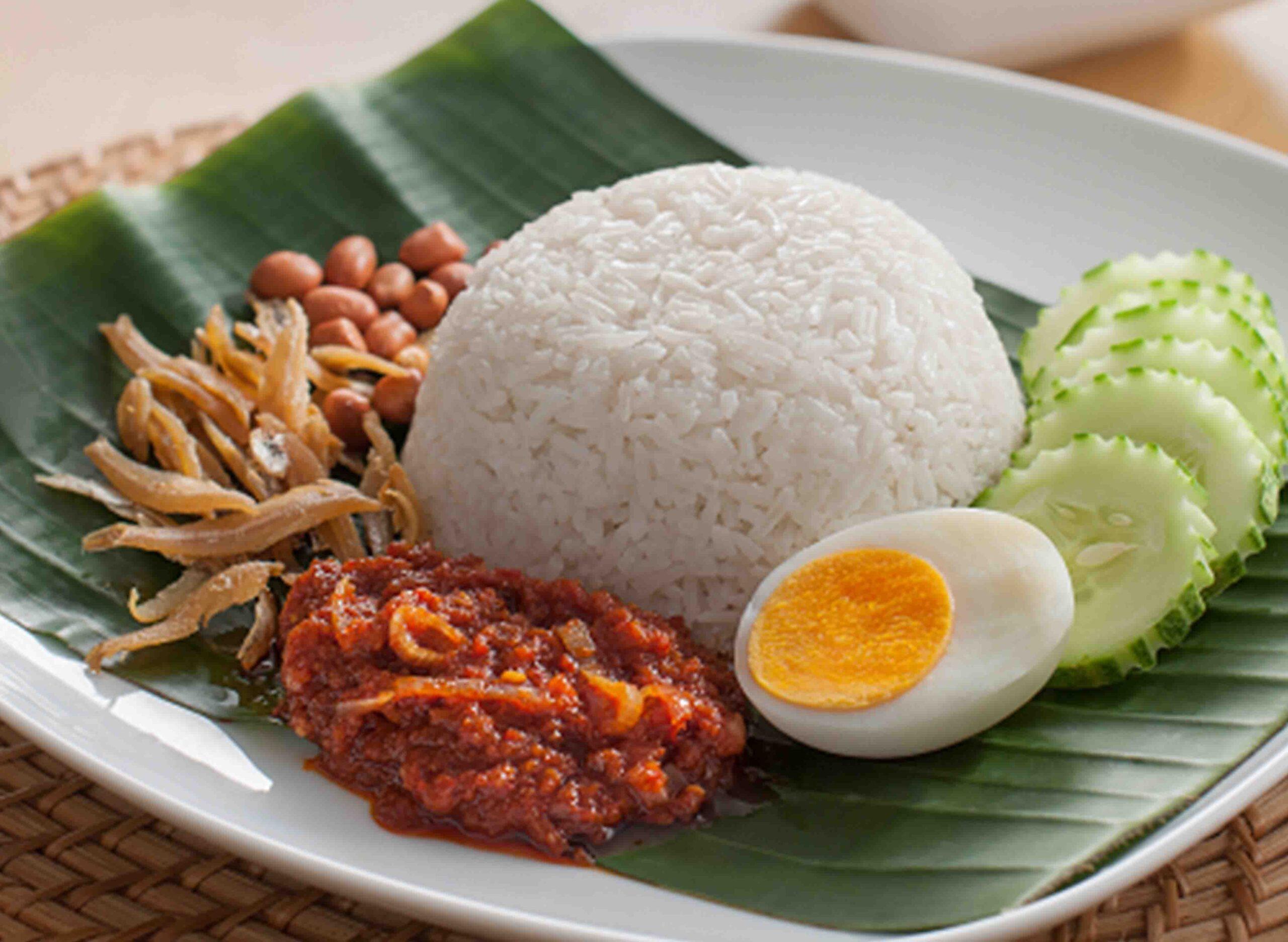
Malaysian Nasi Lemak is one of Malaysia’s most iconic and beloved dishes. The name literally refers to the rich, fragrant rice cooked with coconut milk, which forms the heart of the meal. Traditionally served with spicy sambal, crispy fried anchovies, roasted peanuts, cucumber, and hard-boiled egg, Nasi Lemak brings together creamy, spicy, salty, crunchy, and refreshing flavors in one unforgettable plate.Although often enjoyed for breakfast, Nasi Lemak is much more than a morning meal. It can be found throughout Malaysia at hawker stalls, restaurants, cafés, markets, and family kitchens.

Malaysian Nasi Lemak:
Different regions and cooks have their own versions, with accompaniments ranging from fried chicken and beef rendang to seafood, vegetables, and other flavorful dishes.The secret to wonderful Nasi Lemak begins with properly cooked coconut rice. Fragrant pandan leaves, coconut milk, ginger, and a little salt give the rice its characteristic aroma and richness. When paired with a deeply flavored sambal and traditional accompaniments, the result is a satisfying Malaysian meal that is both comforting and celebratory.
History:
Nasi Lemak has deep roots in the Malay culinary traditions of the Malay Peninsula and surrounding Southeast Asian region. The dish developed around ingredients that were readily available in local communities, particularly rice, coconut milk, pandan, chilies, and small dried anchovies.Historically, coconut milk was an important way to enrich rice, while sambal and preserved ingredients such as dried anchovies provided strong flavors and helped create a satisfying meal from simple pantry ingredients. Over time, Nasi Lemak evolved from a traditional home-style dish into a national culinary symbol of Malaysia.Today, Nasi Lemak is enjoyed across Malaysia and has countless variations. The classic combination of coconut rice, sambal, ikan bilis, peanuts, egg, and cucumber remains one of the most recognizable presentations, while modern versions may include fried chicken, rendang, squid, prawns, beef, or vegetarian accompaniments.
Subscribe to our youtube channel Kitchenpedia for more delicious recipes and hit the like button if you enjoyed this youtubevideo. Share it with your friends and Family.
Malaysian Nasi Lemak

Ingredients
For the Coconut Ric
- 2 cups jasmine rice
- 1 cup coconut milk
- 1½ cups water, approximately
- 2 pandan leaves, tied into knots
- 1-inch piece fresh ginger, sliced
- ½ teaspoon salt
For the Sambal
- 10–12 dried red chilies, soaked and softened
- 4 fresh red chilies
- 5 shallots, peeled
- 1-inch piece ginger
- 1 tablespoon tamarind paste
- 1–2 tablespoons palm sugar or brown sugar
- 3 tablespoons cooking oil
- ½ cup water
- 1 small onion, thinly sliced
For the Crispy Anchovies
- 1 cup dried anchovies (ikan bilis)
- 1–2 tablespoons cooking oil
For the Peanuts
- ½ cup raw or roasted peanuts
- A pinch of salt, optional
For Serving
- 4 large eggs
- 1 cucumber
- Extra sambal
- Banana leaves, optional, for presentation
Instructions
Wash the Rice
- Place the jasmine rice in a bowl and rinse it several times with cool water until the water becomes mostly clear.Drain well.Properly rinsed rice produces lighter and more distinct grains.
Prepare the Coconut Rice
- Place the washed rice in a rice cooker or heavy saucepan.Add the coconut milk, water, salt, ginger, and pandan leaves.Stir gently to combine.
Cook the Rice
- If using a rice cooker, cook according to the manufacturer's instructions.If using a saucepan, bring the mixture to a gentle simmer, cover, reduce the heat to very low, and cook until the rice has absorbed the liquid and is tender.Allow the rice to rest, covered, for approximately 10 minutes after cooking.
Fluff the Rice
- Remove the pandan leaves and ginger.Gently fluff the rice with a fork or rice paddle.Avoid vigorous stirring because it can make the rice sticky.
Prepare the Sambal
- Place the soaked dried chilies, fresh chilies, shallots, garlic, and ginger into a blender or food processor.Add a little water if necessary and blend into a smooth or slightly coarse paste.
Fry the Sambal Paste
- Heat the cooking oil in a wok or skillet over medium-low heat.Add the blended chili paste.Cook slowly for approximately 10–15 minutes, stirring regularly.The mixture should become darker, thicker, and fragrant.
Add Tamarind and Sugar
- Add the tamarind paste, palm sugar or brown sugar, and salt.Stir well.Taste and adjust the balance of spicy, sweet, salty, and sour flavors.
Add the Onion
- Add the sliced onion to the sambal.Cook for another 5–8 minutes until the onion softens and the sambal becomes thick and glossy.Add a little water if necessary to achieve a spoonable consistency
Prepare the Anchovies
- Clean the dried anchovies by removing any unwanted debris and, if desired, the heads and small bones.Pat them dry.
Fry the Anchovies
- Heat oil in a small frying pan over medium heat.Add the anchovies and fry until crisp and golden.Transfer them to a paper towel-lined plate to remove excess oil.
Toast the Peanuts
- If using raw peanuts, toast them in a dry skillet over medium-low heat until golden and fragrant.Season lightly with salt if desired.If using roasted peanuts, simply warm them briefly or serve them as they are.
Boil the Eggs
- Place the eggs in a saucepan and cover them with water.Bring to a boil, then cook for approximately 9–10 minutes for firm yolks.Transfer the eggs to cold water and allow them to cool.Peel and halve them.
Assemble the Nasi Lemak
- Place a generous mound of coconut rice on each plate.Add a spoonful of sambal alongside the rice.Arrange the crispy anchovies, peanuts, cucumber slices, and halved boiled egg around the rice.
Serve
- Serve the Nasi Lemak warm or at room temperature.For a traditional presentation, serve it on banana leaves or a banana-leaf-lined plate.
Notes
- Rice: Jasmine rice works particularly well because of its fragrant aroma and fluffy texture.
- Coconut milk: Use unsweetened coconut milk rather than sweetened coconut products.
- Pandan: Fresh pandan leaves provide the most traditional aroma.
- Sambal: Adjust the chili quantity according to your preferred heat level.
- Anchovies: Ikan bilis should be fried until crisp but not burnt.
- Peanuts: Roasted peanuts add important texture and savory flavor.
- Eggs: Firm-boiled eggs are traditional, but fried eggs can also be used.
- Serving: Assemble the components immediately before serving to preserve their different textures.
Tips for Malaysian Nasi Lemak:
- Rinse the rice thoroughly before cooking to prevent overly sticky coconut rice.
- Measure the liquid carefully because coconut milk can make rice softer than water alone.
- Cook sambal slowly to develop a deeper flavor.
- Balance the sambal with tamarind and sugar rather than making it only spicy.
- Fry anchovies in batches if necessary so they become evenly crisp.
- Toast peanuts gently to prevent them from burning.
- Let cooked rice rest before fluffing for better texture.
- Serve cucumber cold or at room temperature to contrast with the warm coconut rice.
FAQs for Malaysian Nasi Lemak:
1. What is Nasi Lemak?
Nasi Lemak is a famous Malaysian rice dish featuring fragrant coconut rice served with sambal and accompaniments such as anchovies, peanuts, egg, and cucumber.
2. Why is Nasi Lemak called Nasi Lemak?
The name refers to the richness of the rice from coconut milk. In Malay, nasi means rice and lemak refers to richness or creaminess.
3. Is Nasi Lemak spicy?
The coconut rice itself is mild. The sambal is usually spicy, but you can adjust the amount and type of chilies to suit your preference.
4. Can I make Nasi Lemak without anchovies?
Yes. For a vegetarian version, omit the anchovies and add fried tofu, tempeh, vegetables, or another plant-based protein.
5. Can I use a rice cooker?
Absolutely. A rice cooker is one of the easiest ways to prepare the coconut rice. Add the measured ingredients and cook according to your appliance’s normal rice setting.
6. Can I prepare Nasi Lemak ahead of time?
The sambal can be prepared ahead and refrigerated. The rice is best freshly cooked, while the peanuts and fried anchovies can be prepared earlier and stored separately.
7. What can I serve with Nasi Lemak?
Popular accompaniments include fried chicken, beef rendang, sambal squid, fried fish, curry chicken, vegetables, and additional eggs.
8. Can I make Nasi Lemak less spicy?
Yes. Reduce the dried chilies and fresh chilies in the sambal. You can also serve the sambal separately so everyone can control the amount of heat.
Conclusion:
Malaysian Nasi Lemak is a beautiful celebration of texture, aroma, and bold Southeast Asian flavor. Fragrant coconut rice provides a creamy foundation, while spicy sambal, crispy anchovies, roasted peanuts, boiled egg, and refreshing cucumber create a satisfying balance in every bite.The dish is wonderfully adaptable. Keep the classic combination simple for breakfast, or add fried chicken, beef rendang, seafood, or vegetables to create a complete feast for lunch or dinner.For the best homemade Nasi Lemak, take your time with the sambal and cook it slowly until the flavors become deep and concentrated. Pair it with fluffy coconut rice and plenty of crunchy, fresh accompaniments, and you will have a memorable Malaysian meal that brings authentic Southeast Asian flavors to your table.