

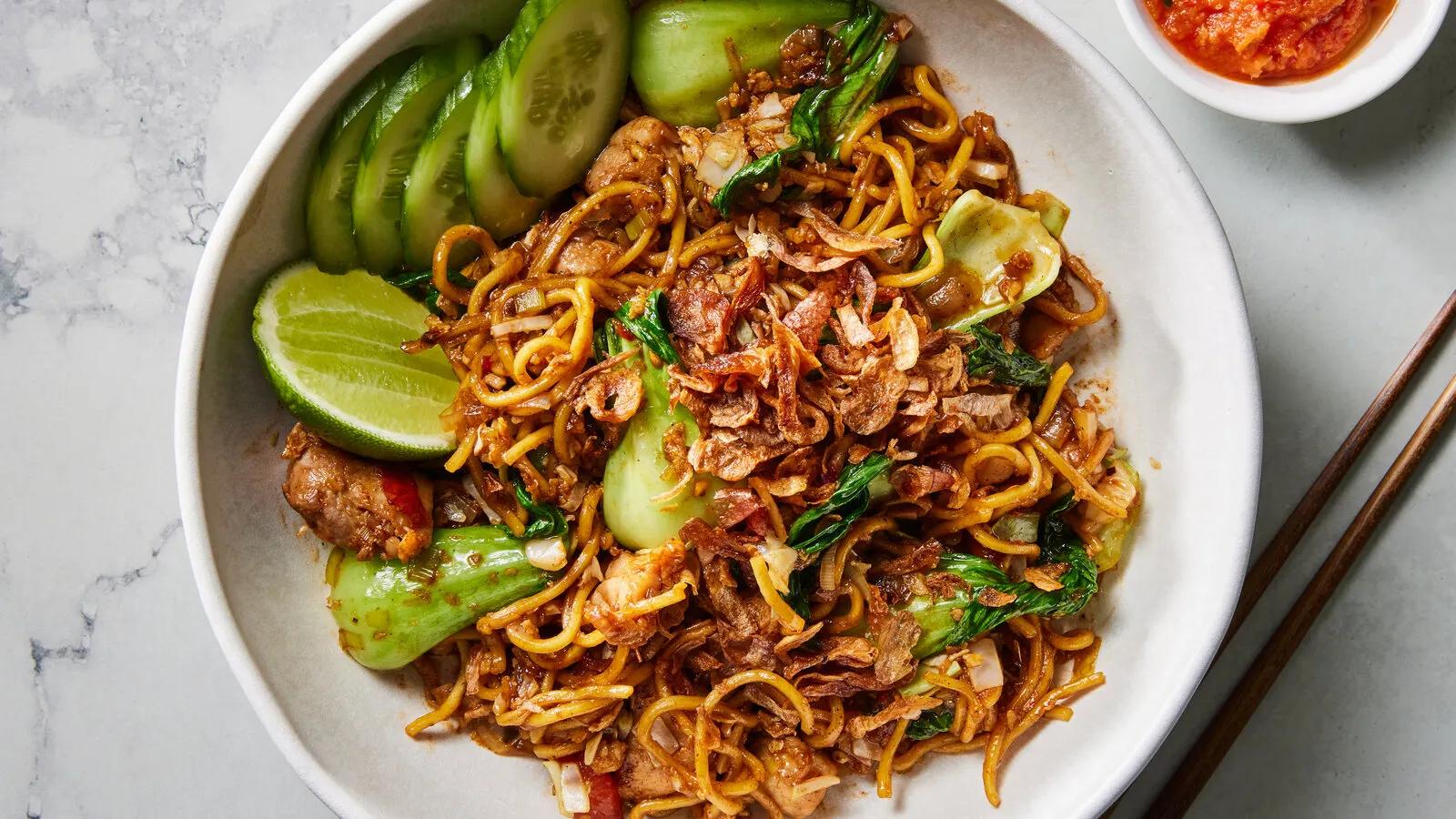
Mie Goreng also spelled Mi Goreng, is one of Indonesia’s most popular noodle dishes. The name simply means “fried noodles,” but the dish is much more than noodles tossed in a hot pan. Chewy noodles are stir-fried with garlic, shallots, vegetables, egg, and a savory-sweet Indonesian sauce, creating a comforting meal packed with bold flavor.One of the defining ingredients is kecap manis, Indonesia’s thick, sweet soy sauce. It gives the noodles their characteristic dark color, gentle sweetness, and caramelized flavour.
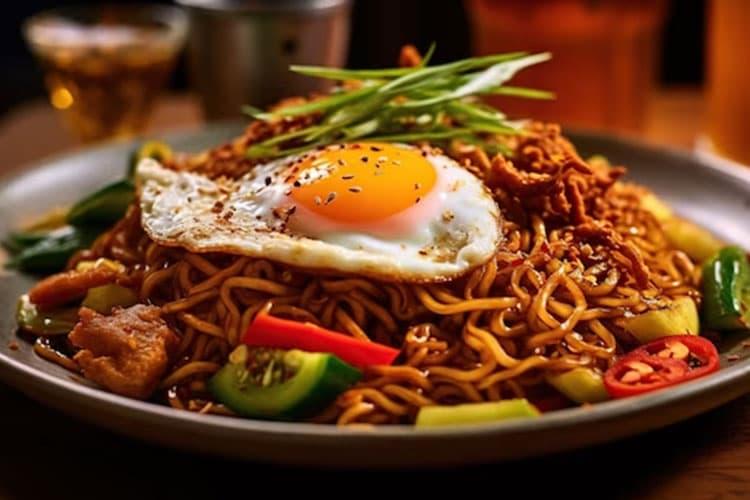
Mie Goreng:
Depending on the region and recipe, Mie Goreng may also contain chicken, shrimp, beef, tofu, cabbage, carrots, spring onions, or other vegetables.This homemade Mie Goreng is quick enough for a weeknight dinner and versatile enough to customize with whatever ingredients you have available. Serve it hot with crispy fried shallots, fresh cucumber, lime wedges, and a little sambal for a delicious Indonesian-inspired meal.
History:
Goreng developed from Indonesia’s long history of noodle dishes and Chinese culinary influence. Chinese immigrants and traders brought noodle-making and stir-frying traditions to Southeast Asia, where local cooks adapted them using Indonesian ingredients and flavors.Over time, Indonesian cooks incorporated ingredients such as kecap manis, shallots, garlic, chilies, shrimp paste, and local spices, giving fried noodles a distinctly Indonesian character.Today, Mie Goreng is enjoyed throughout Indonesia in homes, restaurants, food stalls, markets, and street-food carts. Numerous regional and family versions exist, ranging from simple egg-and-vegetable noodles to hearty versions containing chicken, shrimp, beef, or seafood.
Subscribe to our youtube channel Kitchenpedia for more delicious recipes and hit the like button if you enjoyed this youtubevideo. Share it with your friends and Family.
Mie Goreng

Ingredients
For the Noodles
- 400 g yellow wheat noodles, egg noodles, or fresh noodles
- 2 tablespoons vegetable oil
- 3 garlic cloves, finely minced
- 4 shallots, thinly sliced
- 2 red chilies, thinly sliced
- 150 g boneless chicken thigh, thinly sliced
- 100 g cabbage, finely shredded
- 1 medium carrot, julienned
- ½ cup bean sprouts
- 2 spring onions, sliced
For the Mie Goreng Sauce
- 3 tablespoons kecap manis
- 1 tablespoon regular soy sauce
- 1 tablespoon oyster sauce
- 1 tablespoon tomato ketchup
- 1 teaspoon sambal oelek or chili sauce
- ½ teaspoon white pepper
For Serving
- Fried shallots
- Sliced cucumber
- Lime wedges
- Fresh red chilies
- Sambal or chili sauce
- Crispy prawn crackers, optional
Instructions
Prepare the Noodles
- Cook the noodles according to the package instructions, but avoid overcooking them.Drain thoroughly and rinse briefly under cool water if necessary to stop the cooking process.Toss the noodles with a small amount of oil to prevent them from sticking together.Set aside.
Prepare the Sauce
- In a small bowl, combine the kecap manis, regular soy sauce, oyster sauce, tomato ketchup, sambal, white pepper, and salt.Mix well and set aside.Having the sauce ready before stir-frying makes the cooking process much easier.
Cook the Chicken
- Heat 1 tablespoon of oil in a large wok or skillet over medium-high to high heat.Add the sliced chicken and stir-fry for approximately 3–4 minutes, until cooked through and lightly browned.Transfer the chicken to a plate and set aside.
Fry the Aromatics
- Add the remaining oil.Add the shallots, garlic, and sliced chilies.Stir-fry for approximately 30–60 seconds until fragrant.Be careful not to burn the garlic.
Add the Vegetables
- Add the cabbage and carrot.Stir-fry over high heat for 1–2 minutes.The vegetables should soften slightly while remaining crisp.Add the bean sprouts near the end so they retain some texture.
Add the Noodles
- Add the cooked noodles to the wok.Return the chicken and scrambled egg to the pan.Toss everything together using tongs or two spatulas.
Add the Sauce
- Pour the prepared sauce around the sides of the hot wok.Immediately toss the noodles so the sauce coats everything evenly.Continue stir-frying for 2–3 minutes.The noodles should become glossy, dark, and aromatic
Finish the Mie Goreng
- Add the spring onions and toss once more.Taste and adjust the seasoning.For extra heat, add more sambal or sliced fresh chilies.For additional sweetness, add a small splash of kecap manis.
Serve
- Transfer the Mie Goreng to serving plates.Top with fried shallots and spring onions.Serve immediately with cucumber slices, lime wedges, sambal, and crispy prawn crackers if desired.
Notes
- Do not overcook the noodles: Slightly firm noodles hold their texture better during stir-frying.
- Use high heat: High heat helps create the characteristic smoky wok flavor.
- Prepare everything beforehand: Stir-frying happens quickly, so have all ingredients ready.
- Use kecap manis: It provides the signature sweet and caramelized Indonesian flavor.
- Do not overcrowd the wok: Cook in batches if necessary.
- Adjust salt carefully: Soy sauce, oyster sauce, and kecap manis already contain salt.
- Use fresh vegetables: Crisp vegetables provide a pleasant contrast to the soft noodles.
- Serve immediately: Mie Goreng tastes best straight from the wok.
Tips for Mie Goreng:
- Use day-old cooked noodles when possible: Slightly dried noodles stir-fry beautifully without becoming mushy.
- Choose a wide wok: More surface area allows better browning and prevents steaming.
- Cut ingredients thinly: Small, evenly sized pieces cook quickly and evenly.
- Add sauce around the hot wok: This helps the sauce caramelize slightly before coating the noodles.
- Use chicken thighs: They remain juicy and flavorful during high-heat cooking.
- Keep vegetables slightly crunchy: Overcooked vegetables can make the noodles watery.
- Finish with lime: Fresh acidity balances the rich sweet soy sauce.
- Add fried shallots: They provide an authentic crunchy texture and extra savory flavor.
FAQs for Mie Goreng:
1. What does Goreng mean?
Goreng literally means “fried noodles” in Indonesian. It is a popular Indonesian noodle dish made by stir-frying noodles with vegetables, aromatics, sauces, and often egg or meat.
2. What noodles are best for Goreng?
Yellow wheat noodles, fresh egg noodles, or medium-thick Asian wheat noodles work particularly well. Instant noodles can also be used for a quick version.
3. Is Goreng spicy?
It can be spicy, but the heat level is completely customizable. Add sambal and fresh chilies according to your preference.
4. What makes Goreng taste Indonesian?
The combination of kecap manis, garlic, shallots, chilies, white pepper, and savory sauces gives Mie Goreng its characteristic Indonesian flavor.
5. Can I make Goreng vegetarian?
Yes. Omit the chicken and oyster sauce and use tofu, mushrooms, cabbage, carrots, bean sprouts, and other vegetables.
6. Can I use spaghetti instead of Asian noodles?
Yes. Spaghetti can work as a substitute when other noodles are unavailable, although the texture will be different from traditional Mie Goreng.
7. Can I make Goreng ahead of time?
Yes, but it is best served fresh. If storing leftovers, refrigerate them promptly in an airtight container and reheat thoroughly before serving.
8. Why did my Goreng become soggy?
The most common causes are overcooked noodles, excess sauce, too many ingredients in the wok, or cooking over low heat. Drain noodles well and stir-fry quickly over high heat.
Conclusion:
Goreng is the ultimate Indonesian comfort food—quick, aromatic, savory, sweet, and endlessly customizable. The combination of chewy noodles, fragrant garlic and shallots, crisp vegetables, tender chicken, egg, and caramelized kecap manis creates a deeply satisfying dish that works beautifully for lunch or dinner.The key to excellent Mie Goreng is preparing all your ingredients before you start cooking and using high heat for a quick stir-fry. Finish the noodles with fresh lime, crunchy fried shallots, cucumber, and sambal for an irresistible Indonesian street-food experience at home.Whether you make it with chicken, shrimp, beef, tofu, or simply vegetables and egg, this Mie Goreng recipe is an easy and flavorful way to bring the taste of Indonesia to your kitchen.