

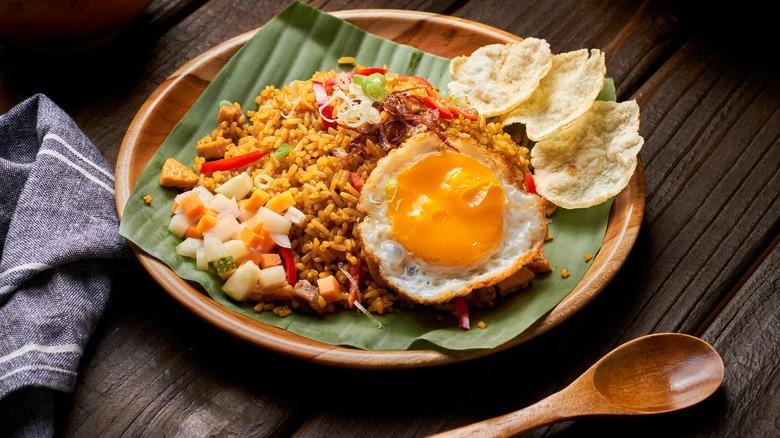
Nasi Goreng, meaning “fried rice” in Indonesian, is one of Indonesia’s most beloved and recognizable comfort foods. Made by stir-frying cooked rice with garlic, shallots, chilies, sweet soy sauce, and savory seasonings, this flavorful dish is quick, satisfying, and incredibly versatile. It can be prepared with chicken, shrimp, eggs, vegetables, or simply enjoyed as a delicious meat-free meal.The secret to excellent nasi goreng is using cold, cooked rice. Chilled rice has a firmer texture and less surface moisture, allowing each grain to fry beautifully instead of becoming soft or mushy.
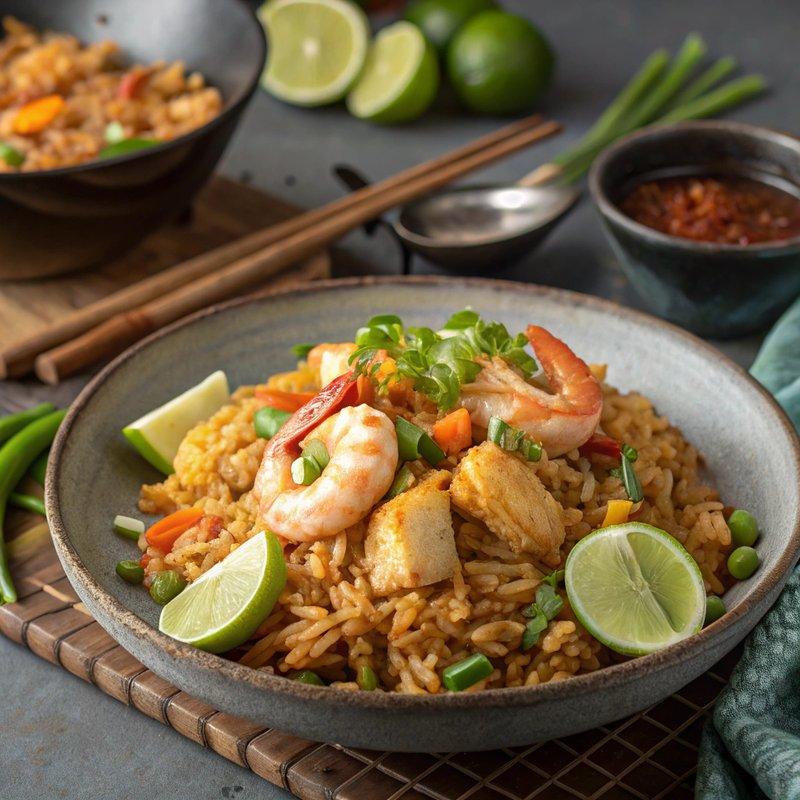
Nasi Goreng:
Indonesian sweet soy sauce, known as kecap manis, provides the characteristic dark color, subtle sweetness, and rich savory depth that makes nasi goreng so distinctive.Nasi Goreng is perfect for breakfast, lunch, dinner, or a late-night meal. It is commonly served with a fried egg, cucumber, tomato, crispy fried shallots, crackers, and sambal. Whether you make a simple homemade version or a more elaborate restaurant-style plate, this Indonesian fried rice is packed with bold, aromatic flavor.
History:
Nasi goreng has deep roots in Indonesian culinary culture and is closely related to the broader tradition of fried rice found throughout Asia. Fried rice is an excellent way to transform leftover cooked rice into a flavorful new meal, making it practical as well as delicious.Indonesian nasi goreng developed its own distinctive character through the use of local ingredients such as shallots, garlic, chilies, shrimp paste, tamarind, and kecap manis. These ingredients give Indonesian fried rice a deeper, sweeter, more aromatic flavor profile than many other fried-rice preparations.Today, nasi goreng is enjoyed throughout Indonesia, from home kitchens and street-food stalls to restaurants. Different regions, families, and cooks have their own versions, with variations featuring chicken, shrimp, beef, salted fish, vegetables, eggs, or spicy sambal.
Subscribe to our youtube channel Kitchenpedia for more delicious recipes and hit the like button if you enjoyed this youtubevideo. Share it with your friends and Family.
Nasi Goreng (Indonesian Fried Rice)

Ingredients
For the Fried Rice
- 4 cups cooked and chilled white rice, preferably day-old
- 2 tablespoons vegetable oil
- 4 shallots, finely sliced
- 4 garlic cloves, finely minced
- 2–3 red chilies, finely sliced
- 2 large eggs
- 200 g boneless chicken thighs or breast, diced
- 150 g peeled shrimp, optional
- 1 cup shredded cabbage
- ½ cup sliced carrots
- ½ cup green onions, sliced
- 2 tablespoons Indonesian sweet soy sauce (kecap manis)
- 1 tablespoon regular soy sauce
- 1 tablespoon oyster sauce, optional
- ½ teaspoon white pepper
- ½ teaspoon salt, or to taste
For the Spice Paste
- 3 shallots
- 3 garlic cloves
- 2 red chilies
- 1 small red chili, optional for extra heat
- 1 teaspoon shrimp paste (terasi), optional
- ½ teaspoon ground coriander
- 1 teaspoon vegetable oil
For Serving
- 4 fried eggs
- Tomato wedges
- Crispy fried shallots
- Fresh green onions
- Sambal
- Lime wedges
Instructions
Prepare the Rice
- Use completely cooled cooked rice for the best results.If cooking fresh rice, spread it onto a large tray and allow it to cool completely. Refrigerate it for several hours or overnight.Break apart any large clumps with your fingers or a fork before stir-frying.Cold rice separates easily and produces a much better fried-rice texture.
Prepare the Spice Paste
- Place the shallots, garlic, red chilies, shrimp paste if using, coriander, and vegetable oil into a food processor.Blend until a coarse or smooth paste forms.A mortar and pestle can also be used for a more traditional preparation.
Prepare the Chicken and Shrimp
- Cut the chicken into small, evenly sized pieces.Pat the shrimp dry with paper towels.Season the chicken and shrimp lightly with a little salt and white pepper.Set aside.
Prepare the Seasoning Mixture
- In a small bowl, combine the kecap manis, regular soy sauce, tamarind paste, and oyster sauce if using.Mix well.Having the seasoning ready before cooking makes the stir-frying process much easier.
Scramble the Eggs
- Heat a large wok or wide skillet over medium-high heat.Add about 1 teaspoon of oil.Crack in two eggs and scramble them lightly.Cook until just set but still soft.Transfer the eggs to a plate and roughly chop them.Repeat with the remaining eggs if desired, or reserve two eggs for frying later.
Fry the Aromatics
- Add another small amount of oil to the wok if necessary.Add the prepared spice paste.Stir-fry over medium-high heat for approximately 2–4 minutes.The mixture should become fragrant and slightly darker.This step is important because it develops the deep savory aroma of the nasi goreng.
Add the Fresh Vegetables
- Add the sliced cabbage, carrots, and green onions.Stir-fry for approximately 1–2 minutes.Keep the vegetables slightly crisp rather than cooking them until completely soft.
Add the Cold Rice
- Add the chilled cooked rice to the wok.Increase the heat to high.Use a wok spatula to break apart the rice and toss it with the aromatic mixture.Stir-fry for approximately 3–4 minutes.Every grain should become coated with the spice mixture.
Add the Seasonings
- Pour the kecap manis mixture around the sides of the hot wok.This allows the sauce to caramelize slightly before mixing into the rice.Toss everything together.The rice should gradually become golden-brown to deep brown and fragrant.
Return the Chicken and Shrimp
- Add the cooked chicken and shrimp back into the wok.Add the scrambled egg.Toss everything together over high heat.Cook for another 1–2 minutes.Taste and adjust the salt, kecap manis, chilies, or tamarind according to preference.
Fry the Eggs
- In a separate frying pan, heat a small amount of oil over medium-high heat.Crack in the remaining eggs.Cook until the whites are set and the edges become crispy.For a traditional presentation, keep the yolks slightly runny if desired.
Serve
- Divide the nasi goreng between four plates.Place a fried egg on top of each serving.Garnish with cucumber slices, tomato wedges, crispy fried shallots, green onions, and a lime wedge.Serve immediately with sambal and shrimp crackers.
Notes
- Use cold rice: Day-old refrigerated rice gives the best texture because the grains are firmer and less sticky.
- Use a wide wok: A large cooking surface allows the rice to fry rather than steam.
- Kecap manis matters: Indonesian sweet soy sauce provides the characteristic dark color and sweet-savory flavor.
- Do not overcrowd the wok: If making a large batch, cook in smaller portions for better browning.
- Keep the heat high: High heat helps develop the characteristic fried and slightly smoky flavor.
- Shrimp paste is optional: It provides traditional savory depth but can be omitted for a milder or vegetarian-friendly version.
- Adjust the spice level: Increase or decrease the chilies according to your preference.
- Serve immediately: Nasi goreng tastes best when served hot directly from the wokk.
Tips for Nasi Goreng:
- Dry the rice properly: Spread freshly cooked rice on a tray before refrigerating if you do not have leftover rice.
- Break rice clumps first: Separating the grains before adding them to the wok makes stir-frying much easier.
- Use chicken thighs: They remain juicy and flavorful even when cooked over high heat.
- Cook proteins separately: Browning chicken and shrimp separately prevents the wok from becoming overcrowded.
- Fry the spice paste well: Properly cooking the aromatics removes their raw flavor and builds a deeper foundation.
- Add sauces around the wok: Pouring kecap manis around the hot sides allows some caramelization before it coats the rice.
- Do not add too much sauce: Excess liquid can make the fried rice wet instead of fluffy and separated.
- Finish with fresh acidity: Lime juice or a little sambal brightens the rich fried rice and balances the sweetness.
FAQs for Nasi Goreng:
1. What is goreng?
Nasi goreng is Indonesian fried rice. It is commonly made with cooked rice, aromatics, chilies, kecap manis, eggs, and various proteins or vegetables.
2. What makes Indonesian fried rice different?
The use of kecap manis, Indonesian aromatics, chilies, and often shrimp paste gives nasi goreng its distinctive sweet, savory, aromatic, and slightly smoky flavor.
3. Can I use freshly cooked rice?
Yes, but freshly cooked rice can be too moist and sticky. For the best results, spread it on a tray to cool and refrigerate it before frying.
4. What is kecap manis?
Kecap manis is a thick Indonesian sweet soy sauce. It is sweeter and thicker than ordinary soy sauce and is an important ingredient in nasi goreng.
5. Can I make nasi goreng without shrimp paste?
Absolutely. Shrimp paste is optional. You can omit it or replace its savory depth with a little extra soy sauce or another suitable savory seasoning.
6. Can I make nasi goreng vegetarian?
Yes. Use vegetables and tofu or tempeh instead of meat and shrimp, and omit shrimp paste and other seafood-based ingredients.
7. Why is my fried rice mushy?
The most common causes are using warm, freshly cooked rice, adding too much sauce, overcrowding the wok, or cooking over insufficient heat.
8. Can I make nasi goreng ahead of time?
It is best served immediately, but leftover nasi goreng can be refrigerated promptly and reheated thoroughly. Store leftovers in an airtight container and use them within a safe refrigerated storage period.
Conclusion:
Nasi Goreng is a wonderfully satisfying Indonesian fried rice that combines cold cooked rice with fragrant shallots, garlic, chilies, sweet soy sauce, vegetables, eggs, and your choice of protein. Every grain becomes coated in a rich, aromatic seasoning that creates an irresistible balance of sweet, savory, spicy, and slightly smoky flavors.The recipe is also incredibly flexible. Use chicken, shrimp, beef, tofu, tempeh, or vegetables depending on what you have available. The essential ingredients are the cold rice, aromatic spice mixture, and kecap manis, which together give the dish its unmistakable Indonesian character.For the classic presentation, top each serving with a crispy-edged fried egg and serve it alongside cucumber, tomato, sambal, fried shallots, lime, and crunchy shrimp crackers. Whether enjoyed as a quick weeknight dinner, comforting breakfast, or late-night meal, homemade nasi goreng is an easy and delicious way to bring authentic Indonesian-inspired flavors to your table.