

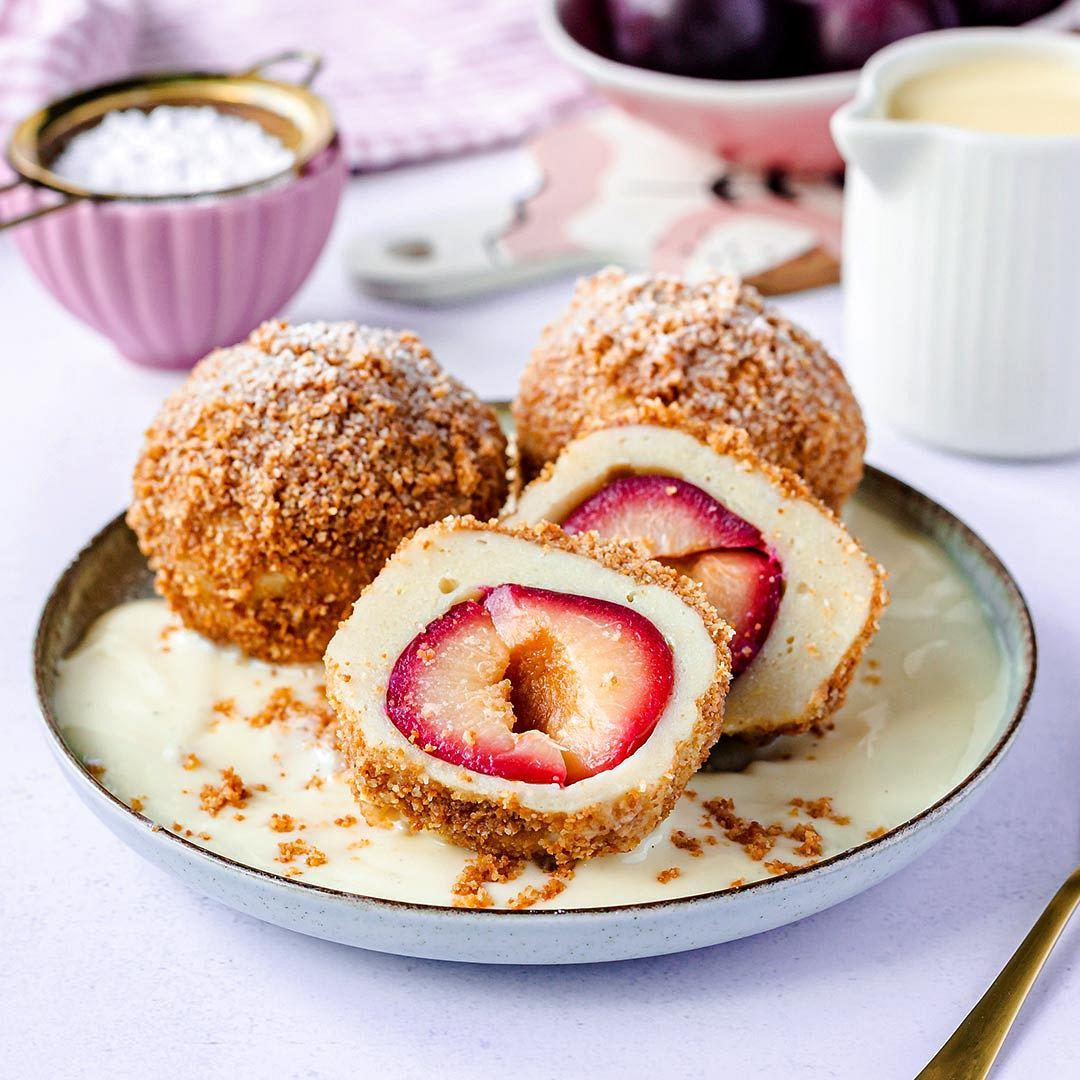
Potato Plum Dumplings, known in Austria as Zwetschgenknödel, are a beloved Central European comfort dessert made by wrapping sweet, ripe plums in a tender potato-based dough. The dumplings are boiled until soft and then coated in buttery toasted breadcrumbs, sugar, and cinnamon. The combination of fluffy dough, warm fruit, and crisp crumbs makes this dessert wonderfully satisfying.
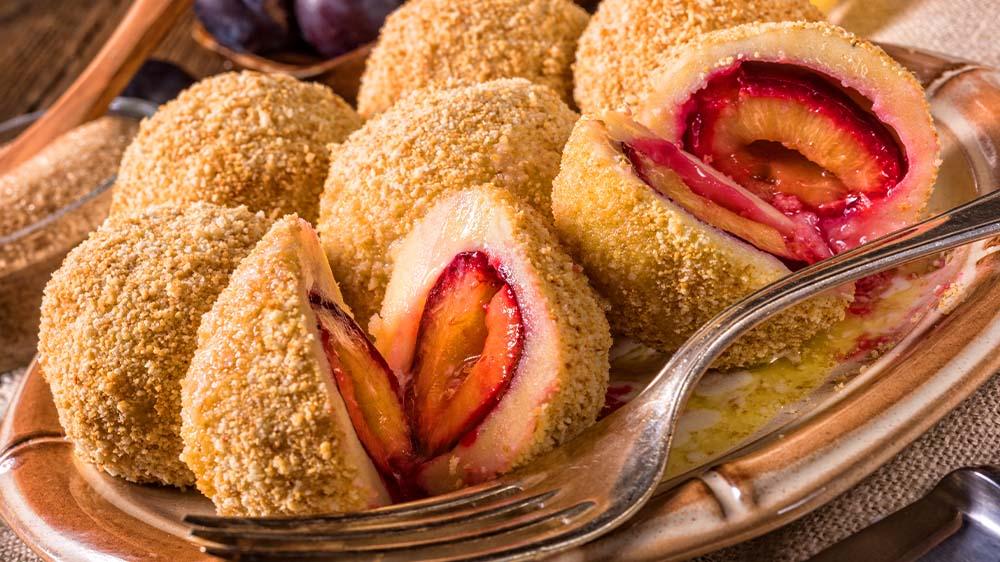
Potato Plum Dumplings;
Although they may sound unusual to anyone unfamiliar with sweet potato-based dough, these dumplings are a classic example of Austrian cuisine’s ability to transform humble ingredients into something special. Potatoes provide a soft, delicate texture while the plums become juicy and fragrant during cooking.Potato Plum Dumplings are particularly popular in late summer and early autumn when fresh plums are plentiful. They can be served as a dessert, sweet main course, or comforting afternoon treat and are especially delicious when served warm with a generous coating of cinnamon breadcrumbs.
History:
Potato dumplings have been part of Central European cooking for generations. As potatoes became widely cultivated in Europe, cooks incorporated them into both savory and sweet dishes.In Austria and neighboring regions, fruit-filled dumplings developed into popular seasonal specialties. Zwetschgenknödel, made with plums or damson-type fruit, became especially associated with Austrian and Central European home cooking.Different regions have their own versions. Some use potato dough, while others use curd cheese or other doughs. The traditional combination of fruit, dumpling dough, buttered breadcrumbs, and cinnamon remains one of the most recognizable preparations.
Subscribe to our youtube channel Kitchenpedia for more delicious recipes and hit the like button if you enjoyed this youtubevideo. Share it with your friends and Family.
Potato Plum Dumplings

Ingredients
For the Potato Dough
- 750 g potatoes, preferably floury/starchy potatoes
- 150–180 g all-purpose flour
- 30 g unsalted butter, melted
- ½ teaspoon salt
- 1 tablespoon semolina, optional
For the Filling
- 10–12 small ripe plums
- 10–12 small sugar cubes or approximately 2–3 tablespoons brown sugar
- ½ teaspoon ground cinnamon, optional
For the Breadcrumb Topping
- 75 g fine breadcrumbs
- 50 g unsalted butter
- 2 tablespoons granulated sugar
- 1 teaspoon ground cinnamon
For Serving
- Powdered sugar, optional
- Additional melted butter, optional
Instructions
- Wash the potatoes and boil them in their skins until completely tender.Drain well and allow them to cool enough to handle.Peel the potatoes while still warm
- Pass the cooked potatoes through a potato ricer or mash them until completely smooth.Avoid leaving large lumps, as they can make the dough difficult to work with.Allow the potatoes to cool until warm rather than hot.
- Place the mashed potatoes in a large bowl.Add the flour, egg, melted butter, salt, and optional semolina.Mix gently until a soft dough forms.Do not overwork the dough. Add a little more flour only if it is too sticky to handle.
- Divide the potato dough into approximately 10–12 equal portions.Flatten each portion into a small disk
- Place one prepared plum in the center of each piece of dough.Carefully bring the dough around the fruit and pinch the edges together.Roll gently between your palms to create a smooth, sealed dumpling.Make sure there are no openings through which the plum juice can escape.
- Avoid a vigorous boil because rough bubbling can cause the dumplings to break apart.Cook for approximately 12–15 minutes, depending on their size.When cooked, the dumplings should rise toward the surface and feel tender.
- Toast gently, stirring frequently, until golden and fragrant.
- Place them into the skillet with the cinnamon breadcrumbs and gently roll them until completely coated.
- Arrange the dumplings on serving plates.Dust with powdered sugar if desired.Serve warm with additional melted butter or a spoonful of lightly sweetened cream.
Notes
- Use starchy potatoes: Floury potatoes create lighter and more tender dough.
- Avoid watery potatoes: Excess moisture can make the dough sticky.
- Rice the potatoes: This creates a smoother dough than coarse mashing.
- Don't overmix: Excessive kneading can make potato dough dense.
- Choose ripe but firm plums: They should be sweet but firm enough to handle.
- Seal carefully: Any opening can allow the fruit juices to escape during cooking.
- Simmer gently: Rapid boiling can cause the dumplings to split.
- Serve immediately: They are especially delicious while warm.
Tips for Potato Plum Dumplings:
- Cook potatoes in their skins to prevent them from absorbing too much water.
- Let potatoes release steam after cooking before making the dough.
- Add flour gradually rather than adding the entire amount immediately.
- Keep your hands lightly floured while shaping the dumplings.
- Use small-to-medium plums so the dough cooks evenly around the fruit.
- Seal every dumpling completely before placing it in the water.
- Toast breadcrumbs slowly for a deeper buttery flavor without burning them.
- Balance sweetness with tart fruit: Slightly tart plums create the most delicious contrast with the cinnamon sugar.
FAQs for Potato Plum Dumplings:
1. What are Potato Plum Dumplings?
Potato Plum Dumplings are traditional Central European dumplings made by wrapping plums in potato-based dough and boiling them. They are usually finished with buttered cinnamon breadcrumbs.
2. What are they called in Austria?
They are commonly called Zwetschgenknödel, particularly when made with zwetschgen-type plums.
3. Can I use regular plums?
Yes. Regular ripe plums work well. Smaller, firm plums are generally easier to wrap and cook evenly.
4. Can I make these without potatoes?
Yes, but they would no longer be potato plum dumplings. Austrian variations can use other doughs, including quark-based dough.
5. Why is my potato dough sticky?
The potatoes may contain too much moisture, or they may have been mashed while excessively wet. Add flour gradually until the dough becomes soft and manageable.
6. Why did my dumplings fall apart while boiling?
They may not have been sealed properly, the dough may have been too thin, or the water may have been boiling too vigorously.
7. Can I freeze Potato Plum Dumplings?
Yes. Freeze the uncooked dumplings individually on a tray, then transfer them to a freezer-safe container. They can generally be cooked from frozen, allowing additional cooking time.
8. What can I serve with Potato Plum Dumplings?
They are delicious with cinnamon breadcrumbs and powdered sugar. Vanilla sauce, whipped cream, or a little melted butter can also be served alongside them.
Conclusion:
Potato Plum Dumplings are a wonderfully comforting Austrian dessert that combines soft potato dough, juicy seasonal fruit, buttery breadcrumbs, and warming cinnamon. They may require a little patience during shaping, but the cooking technique is simple once the dumplings are properly sealed.For the best result, use starchy potatoes, avoid adding excessive flour, choose flavorful plums, and simmer the dumplings gently. Finish them generously with golden cinnamon breadcrumbs and serve them warm for a truly traditional Central European treat.