

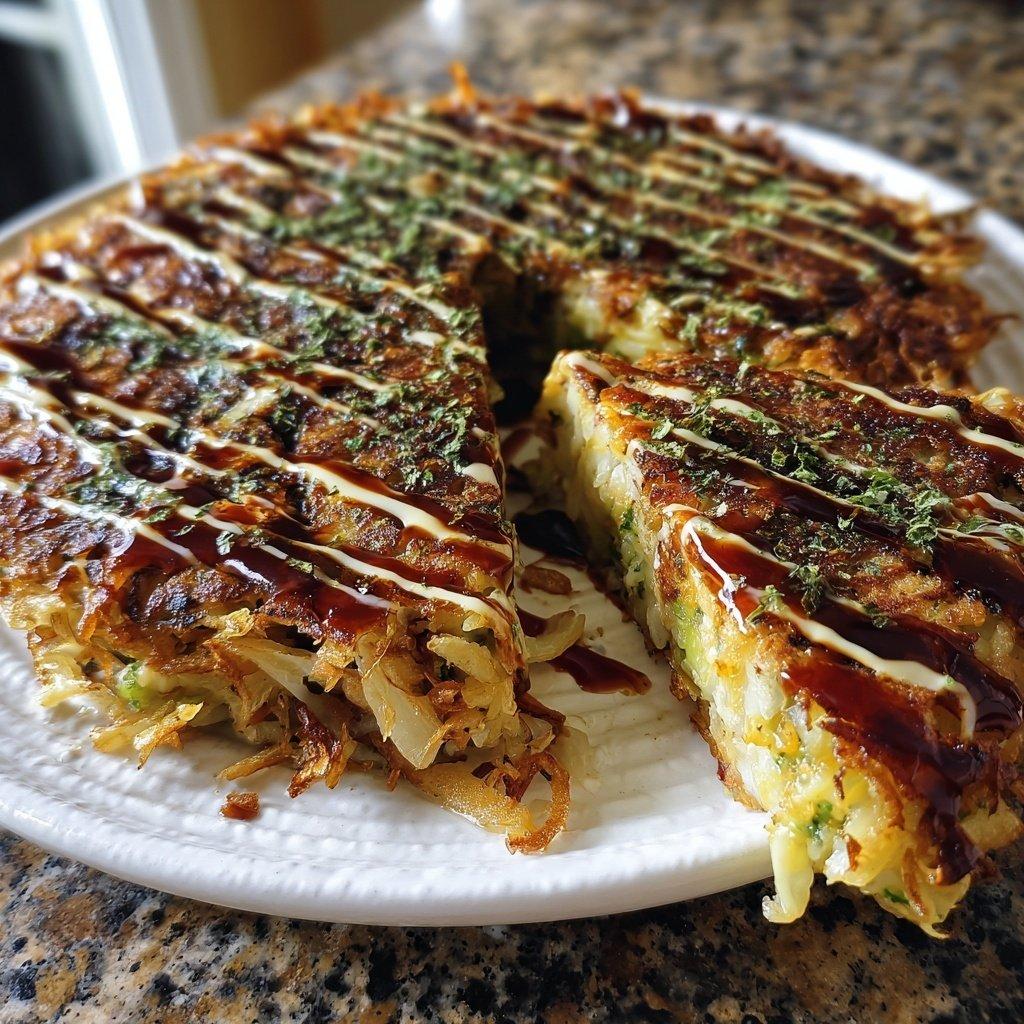
Okonomiyaki is a popular Japanese savory pancake made with shredded cabbage, a simple flour-based batter, eggs, and flavorful toppings. Crispy around the edges and tender in the center, this comforting dish is packed with delicious textures and savory flavors. Often topped with a sweet-and-tangy okonomiyaki sauce, Japanese mayonnaise, seaweed flakes, and bonito flakes, it is a satisfying meal that brings the excitement of Japanese street food right into your kitchen.
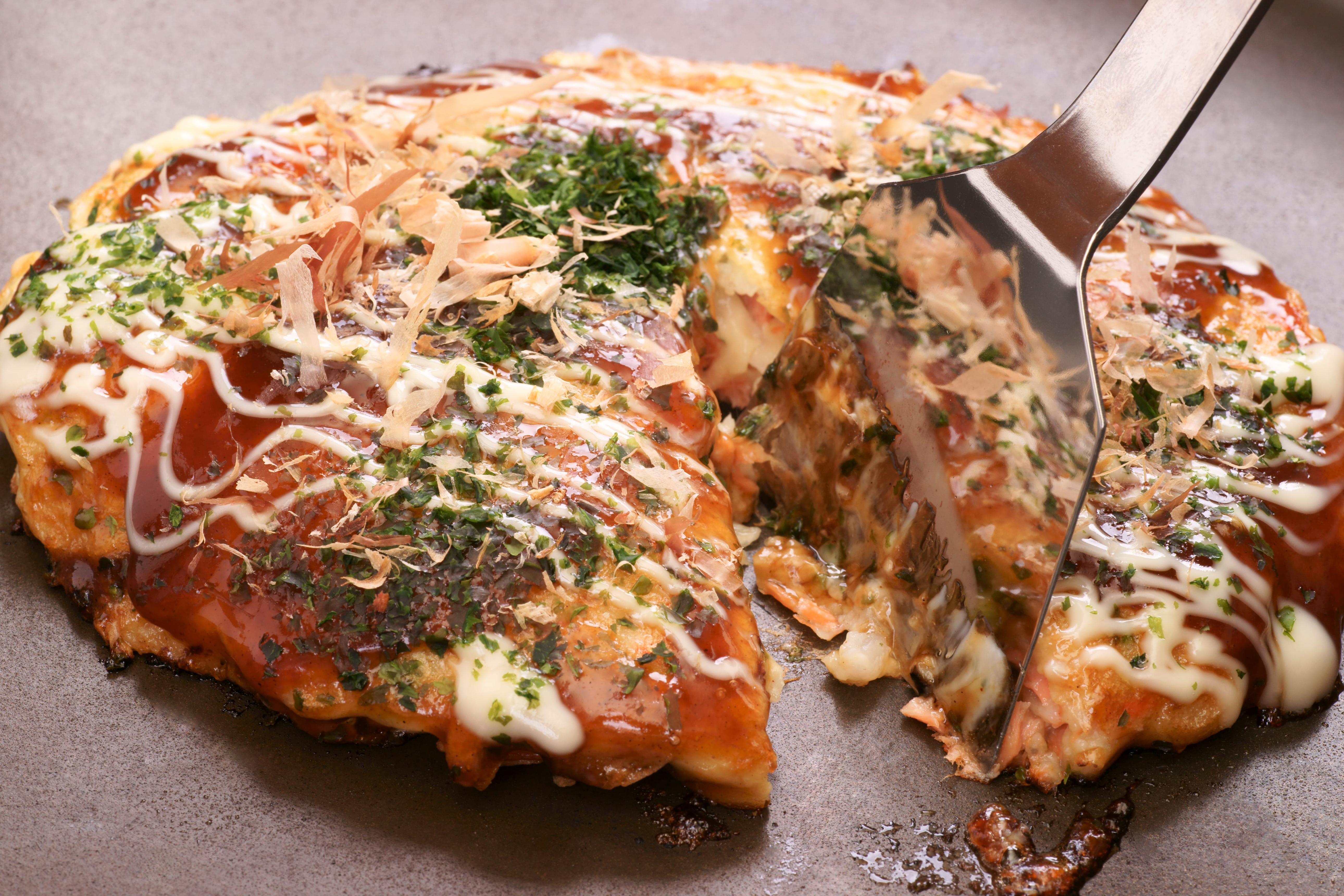
Okonomiyaki:
The name okonomiyaki is commonly understood as “cooked as you like it,” reflecting the dish’s flexibility. You can customize it with ingredients such as shrimp, sliced pork, squid, green onions, cheese, or mushrooms. Cabbage remains a key ingredient because it adds moisture, sweetness, and texture to the pancake. Whether you prepare it for lunch, dinner, or a weekend snack, this versatile recipe is easy to adapt to your favorite flavors.
Making Okonomiyaki at home is simpler than it might appear. The batter comes together quickly, and the pancake cooks in a regular nonstick skillet or on a griddle. You do not need specialized Japanese cooking equipment to enjoy it. With a few everyday ingredients and the right cooking technique, you can create a golden, flavorful pancake that is crisp on the outside, soft inside, and delicious with every bite.
History of Okonomiyaki:
Okonomiyaki developed from earlier Japanese flour-based dishes, including simple pancakes and griddle-cooked snacks that became popular during the twentieth century. Its modern form grew in popularity as inexpensive, filling ingredients such as cabbage and flour became widely available.Two of the best-known styles are Osaka-style and Hiroshima-style Okonomiyaki. In Osaka, the ingredients are generally mixed into the batter before cooking. In Hiroshima, the ingredients are layered, often with noodles and a fried egg. Both styles are beloved throughout Japan and reflect regional approaches to this adaptable dish.Today, Okonomiyaki is enjoyed in restaurants, street-food stalls, and homes across Japan and around the world. Its combination of customizable ingredients, savory sauces, and freshly cooked cabbage makes it a favorite for anyone who enjoys comforting, interactive meals.
Subscribe to our youtube channel Kitchenpedia for more delicious recipes and hit the like button if you enjoyed this youtubevideo. Share it with your friends and Family.
Okonomiyaki (Japanese Pancake)

Ingredients
For the Pancakes
- 3 cups finely shredded green cabbage
- 1 cup all-purpose flour
- 2 large eggs
- ½ cup water or dashi stock
- 2 green onions, thinly sliced
- ¼ cup tenkasu (Japanese tempura scraps), optional
- ½ teaspoon salt
- ¼ teaspoon black pepper
- 1 tablespoon neutral cooking oil
For the Toppings
- 3 tablespoons okonomiyaki sauce
- 2 tablespoons Japanese mayonnaise
- 1 tablespoon aonori (dried green seaweed flakes), optional
- 2 tablespoons bonito flakes, optional
- Extra sliced green onions, for garnish
Instructions
- Wash the cabbage and remove any damaged outer leaves. Slice it into thin shreds so that it cooks evenly and mixes easily with the batter. Thinly slice the green onions and set aside.
- In a large mixing bowl, whisk together the flour, eggs, water or dashi stock, salt, and black pepper until just combined. The batter should be thick enough to coat the cabbage without becoming overly dense. Avoid overmixing, as this can make the pancakes tough.
- Add the shredded cabbage, sliced green onions, and optional tenkasu to the batter. Fold everything together until the vegetables are evenly coated. The mixture should contain plenty of cabbage, which gives Okonomiyaki its signature texture and sweetness.
- Place a large nonstick skillet over medium heat and add a little cooking oil. Spread the oil across the surface. Allow the pan to heat properly before adding the batter so that the pancake begins to develop a golden crust.
- Divide the mixture into two portions. Spoon one portion into the pan and shape it into a round pancake approximately ¾ inch thick. Gently press the top to even it out, but do not flatten it too much.Cook for about 5–7 minutes, until the underside is golden brown and the pancake holds together. Adjust the heat if it browns too quickly.
- Carefully slide a wide spatula underneath the pancake and flip it in one confident movement. Cook the other side for another 5–7 minutes, or until golden and cooked through. If the pancake is thick, cover the pan for a few minutes to help the center cook evenly.
- Transfer the cooked pancake to a serving plate. Spread a generous layer of okonomiyaki sauce over the top, then drizzle with Japanese mayonnaise in a zigzag pattern.
- Sprinkle with aonori, bonito flakes, sesame seeds, and additional green onions as desired. Serve immediately while the pancake is warm, with a crisp exterior and a tender cabbage-filled center.
Notes
-
Shred the cabbage finely: Thin cabbage cooks evenly and makes the pancake easier to flip.
-
Keep the batter thick: A watery batter may cause the pancake to fall apart.
-
Do not overmix: Mix just until the ingredients are combined for a tender texture.
-
Use medium heat: Excessively high heat can brown the outside before the center cooks.
-
Make evenly sized pancakes: Similar thickness helps both pancakes cook consistently.
-
Choose toppings carefully: Traditional toppings add plenty of flavor, but you can adjust them to your preference.
-
Check the center: The pancake should be fully set before you remove it from the pan.
-
Serve immediately: Okonomiyaki tastes best fresh, when the edges are warm and the toppings are fragrant.
Tips for Okonomiyaki:
- Remove excess moisture from the cabbage. Dry cabbage helps prevent the batter from becoming too loose.
- Use dashi for extra flavor. Japanese stock gives the batter a deeper savory taste than plain water.
- Add protein if desired. Thinly sliced pork belly, cooked shrimp, or squid can make the pancake more substantial.
- Avoid pressing too hard. Gently shape the pancake without compressing the cabbage.
- Flip with a wide spatula. A broad spatula supports the pancake and reduces the risk of breaking it.
- Cover the pan briefly. A lid helps the center cook through without over-browning the bottom.
- Make homemade sauce. Mix ketchup, Worcestershire sauce, and a little soy sauce for a convenient substitute when okonomiyaki sauce is unavailable.
- Experiment with regional styles. Once you master the Osaka-style recipe, try Hiroshima-style Okonomiyaki with layered cabbage, noodles, and egg.
FAQs for Okonomiyaki:
1. What does Okonomiyaki mean?
Okonomiyaki is commonly translated as “cooked as you like it.” The name reflects the dish’s flexibility, allowing cooks to choose different fillings and toppings.
2. What is Okonomiyaki made of?
The basic Osaka-style recipe contains shredded cabbage, flour, eggs, and water or dashi. It is commonly topped with okonomiyaki sauce, Japanese mayonnaise, seaweed flakes, and bonito flakes.
3. Is Okonomiyaki vegetarian?
It can be vegetarian if you use vegetable stock, omit bonito flakes, and choose vegetarian-friendly sauces and tempura scraps. Some traditional ingredients contain fish, so check product labels carefully.
4. Can I make Okonomiyaki without dashi?
Yes. Plain water works well as a substitute. The pancake will still taste delicious, although it may have a less pronounced savory flavor.
5. What can I use instead of okonomiyaki sauce?
A simple alternative is a mixture of Worcestershire sauce, ketchup, and a little soy sauce. Adjust the proportions to achieve your preferred balance of sweetness and tanginess.
6. Why does my Okonomiyaki fall apart when flipping?
The batter may be too thin, the cabbage may contain excess moisture, or the underside may not be sufficiently cooked. Use a wide spatula and wait until the pancake holds its shape before flipping.
7. Can I prepare Okonomiyaki ahead of time?
Yes. You can shred the cabbage and slice the green onions ahead of time, storing them in the refrigerator. For the best texture, mix the batter shortly before cooking rather than leaving it mixed with the vegetables for an extended period.
8. How do I store leftover Okonomiyaki?
Let the pancake cool, refrigerate it in an airtight container within two hours, and consume it within three to four days. Reheat it in a skillet or oven until thoroughly hot. For the best texture, add fresh mayonnaise and other toppings after reheating.
Conclusion:
Okonomiyaki is a delicious Japanese comfort food that combines simple ingredients, satisfying textures, and bold savory flavors. With its cabbage-filled center, golden crust, rich sauce, and creamy mayonnaise topping, this Japanese pancake makes an excellent meal for lunch, dinner, or a weekend treat.The recipe is easy to personalize with seafood, meat, vegetables, or vegetarian toppings. You can also adjust the sauces and seasonings to suit your taste. Once you become comfortable with mixing the batter and flipping the pancake, preparing homemade Okonomiyaki becomes a fun and rewarding cooking experience.Try this easy Osaka-style Okonomiyaki recipe at home and enjoy a taste of Japanese street food straight from your own kitchen.